Choosing a toy for a small dog is not simply a matter of finding the cutest product. Size, chewing strength, mouth shape, play style, and health risks all matter. This guide explores how to choose toys for small breed dogs without relying on attractive packaging alone.
The American Pet Products Association reported 65.1 million U.S. households owned a dog in its 2023–2024 National Pet Owners Survey. That large market encourages constant toy innovation, but more choice can create confusion. A tiny rubber ball may still cause choking if it fits completely inside a dog’s mouth. A hard nylon bone may also damage teeth, especially in aggressive chewers. The American Veterinary Medical Association recommends supervising pets with toys and replacing damaged items promptly. Small details matter.
Veterinary behaviorist Dr. Mary Burch offers practical guidance: “Choose toys that are appropriate for your dog’s size and chewing style.” Her point is easy to overlook. A Maltese, Pomeranian, and French Bulldog may all be small, yet they do not play identically. Look for flexible materials, visible seams, suitable openings, and textures that are easy to inspect. Watch how your dog plays. That evidence is more useful than breed stereotypes.
Some recommendations remain imperfect. Market reports often measure spending, not toy safety or long-term enrichment. Therefore, responsible selection requires observation, veterinary advice, and regular inspection. The following seven methods make that process clearer, safer, and more practical.
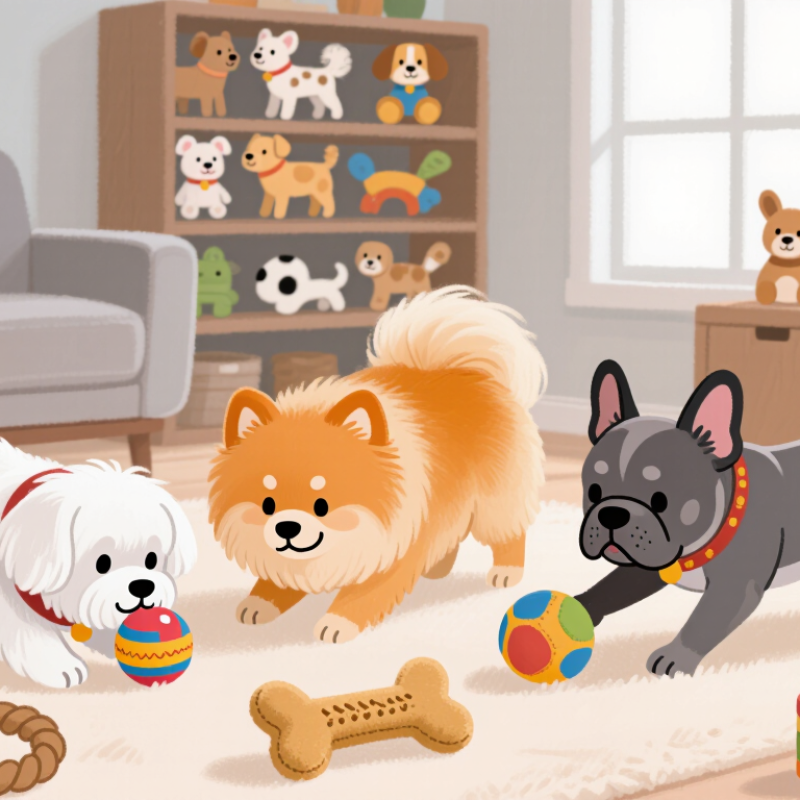
Small breed dogs need toys matched to their mouths, jaws, and play habits, not simply smaller versions of large-dog toys. A safe toy should be large enough to avoid swallowing, yet light enough for easy carrying. Check seams, eyes, squeakers, and loose threads before every play session. I often press a toy gently between my fingers and inspect its edges. Sharp plastic or cracked rubber means immediate removal. Tiny dogs can damage soft materials faster than owners expect.
Choose flexible, durable materials with clear safety guidance, and avoid toys that shed pieces. Puzzle toys should release treats without forcing a dog to bite hard or wedge its jaw. For chewers, supervise the first sessions and watch for gulping, frantic pulling, or bleeding gums. Stop at once. Size labels are useful, but they are not perfect. My own mistake was trusting a “small” label without measuring the opening; the toy was too narrow for comfortable retrieval. A veterinarian or qualified canine behavior professional can help when dental disease, weak jaws, or unusual chewing is present.
Rotate several suitable toys to reduce boredom and inspect them after wet play. Hidden moisture can encourage deterioration. Wash toys according to their material, then dry them fully. Never leave a dog alone with a toy designed for supervised interaction. Replace damaged items promptly, even when the favorite toy still looks emotionally priceless. Safety decisions should follow the individual dog: age, teeth, bite strength, and play style all matter. Good intentions do not prevent choking.
| No. | Selection Method | Why It Matters for Small Dogs | What to Check | Practical Guidance | Replace When |
|---|---|---|---|---|---|
| 1 | Match the Toy to the Dog’s Size | A toy that is too large can be difficult to carry or chew. A toy that is too small may become a choking or swallowing hazard. | The dog should be able to grip and carry it comfortably, but the toy should not fit completely inside the mouth. | Use the toy maker’s weight or size guidance as a starting point, then adjust for the individual dog’s mouth and chewing style. | It becomes small enough to swallow or can no longer be held safely. |
| 2 | Choose Safe Materials and Construction | Small dogs can still damage toys, and loose pieces may be swallowed or cause injury. | Look for securely attached parts, sturdy seams, non-toxic materials, and surfaces without sharp edges or splinters. | Avoid toys with detachable eyes, bells, ribbons, plastic pieces, or thin components that can be pulled off. | Any seam opens, part loosens, or surface develops sharp fragments. |
| 3 | Select the Right Chew Firmness | Very hard objects can fracture teeth, while very soft toys may be torn apart quickly and swallowed. | The toy should have some flexibility and should not be harder than the dog’s teeth. | Avoid extremely hard bones, antlers, and other rigid objects. Choose a texture appropriate for the dog’s bite strength. | It cracks, breaks into chunks, or causes visible tooth discomfort. |
| 4 | Consider the Toy’s Purpose | Different toys support different needs, such as chewing, food enrichment, retrieving, gentle tugging, or mental stimulation. | Assess whether the design suits the dog’s age, energy level, play style, and ability to solve simple challenges. | Rotate several toy types to reduce boredom, while introducing puzzle toys gradually and supervising initial use. | The toy no longer holds food securely or no longer provides safe engagement. |
| 5 | Check for Choking and Swallowing Risks | Small mouths and strong chewing can turn a damaged toy into a blockage hazard. | Inspect for pieces that can be bitten off, holes that can trap the tongue, and openings that may catch the jaw. | Supervise play and remove the toy immediately if the dog bites off material, coughs, gags, or struggles to release it. | It develops detachable fragments, deep tears, or unsafe openings. |
| 6 | Prioritize Easy Cleaning | Food residue, saliva, and dirt can collect in cracks and may support bacterial or mold growth. | Choose washable designs with smooth surfaces, removable inserts, and few deep crevices. | Clean according to the care instructions, rinse thoroughly, and dry completely before reuse. | It remains dirty, develops mold, or retains a strong unpleasant odor after cleaning. |
| 7 | Supervise and Reassess Regularly | A toy that is safe for one dog may be unsafe for another because chewing intensity and play habits vary. | Watch how the dog bites, shakes, pulls, and carries the toy. Check it before and after play. | Use active supervision for new toys, tug games, plush toys, and any toy that can be damaged quickly. | The dog shows repeated gagging, mouth injury, digestive upset, or unusual reluctance to play. |
Safety note: No dog toy is indestructible. Always choose according to the individual dog’s size, chewing behavior, and health needs, and contact a veterinarian promptly if a dog swallows part of a toy or shows signs of choking, pain, vomiting, or breathing difficulty.
Measure your dog’s relaxed mouth gently. Do not force the jaw open. The toy should fit comfortably between the teeth.
Yes. A tiny toy may slip toward the throat during excited play. Choose a size that allows a secure grip.
A shallow, wide toy may be easier to hold than a long cylinder. Watch your dog’s breathing and grip carefully.
Solid rubber with slight flexibility is often suitable. Press it with your fingers. It should feel firm, not rock-hard.
Avoid brittle plastic, loose seams, thin cloth, and detachable pieces. These parts can break or create choking hazards.
Check it before every play session. Look for cracks, deep bite marks, loose threads, and detached pieces. Replace damaged toys promptly.
No toy is truly indestructible. Strong chewing can damage it sooner than expected. I once waited too long to replace one.
Supervise the first sessions closely. Pause frantic chewing and reassess the toy. Rotate several toys to reduce constant wear.
Wash them regularly and dry them fully. Trapped moisture can create unpleasant odors and hygiene concerns. Small details matter.
Choosing the right toy can help small breed dogs stay active, entertained, and safe. This guide explains how to choose toys for small breed dogs by considering their unique safety needs, including smaller mouths, delicate teeth, and lower jaw strength. Select toys that are appropriately sized and shaped so your dog can carry and enjoy them without choking risks. Durable, non-toxic materials are important for reducing damage during chewing and ensuring the toy lasts through regular play.
The best toy collection should offer variety, including options for chewing, fetching, and mental stimulation. Different activities can support dental care, exercise, problem-solving, and healthy boredom relief. Always supervise play, especially when introducing a new toy. Inspect toys regularly for cracks, loose parts, or worn sections, and clean them according to their material. Replace any damaged toy promptly to maintain a safe and enjoyable play environment.

 Lawn Pet