Are soft toys safe for puppies? Often, yes—but the label alone cannot answer that. A plush toy can become risky when a puppy chews off its plastic eyes, pulls out long seams, or swallows loose stuffing. One small tear matters. Check the toy before and after play, and remove it when damage appears. Supervise young puppies, especially enthusiastic chewers. Their play habits can change quickly.
Veterinarian Dr. Marty Becker is a recognized voice in pet care. A practical paraphrase of his general safety advice is: “Choose a toy for the dog in front of you, and supervise how it is used.” For a puppy, that means choosing a soft toy too large to swallow, with firmly attached features and sturdy stitching. Avoid toys with small parts, dangling ribbons, or seams that split under gentle pulling. Watch how your puppy actually plays; a toy described as durable may still fail in eager paws. That part is easy to miss. Wash toys regularly, and discard those that stay damp, smell unusual, or shed filling. No toy is risk-free, and even a thoughtful choice may need replacing sooner than expected. When in doubt, ask your veterinarian to assess your puppy’s chewing style and suggest suitable options.
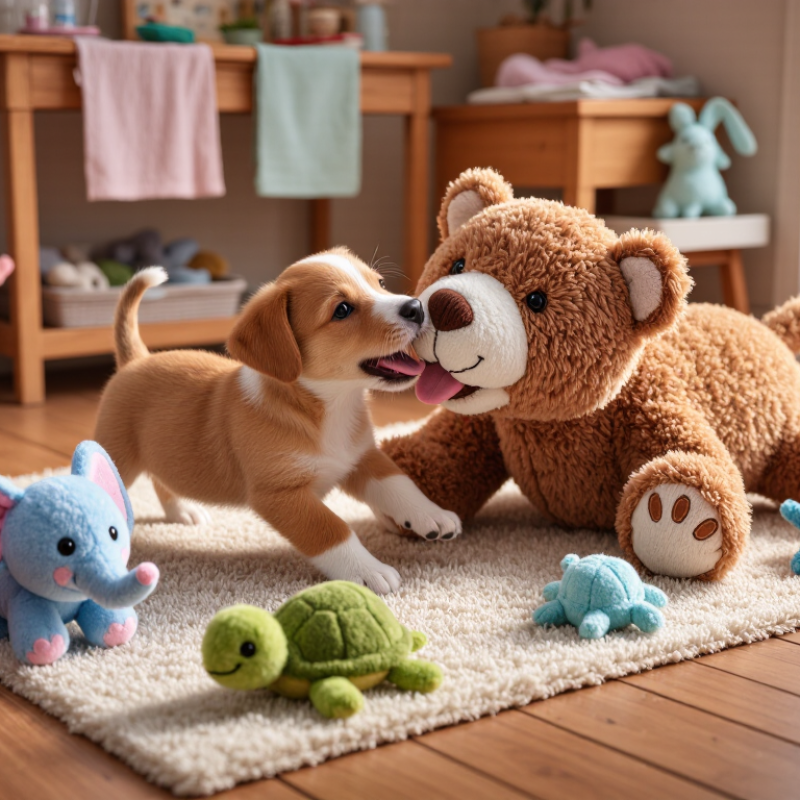
A soft toy should be large enough that your puppy cannot fit the whole toy in its mouth. Check the toy against your puppy’s jaw, not just its body size. A tiny puppy may still have a strong bite, while a larger puppy may be gentle with fabric. If the toy can slip behind the front teeth or disappear into the mouth, choose a bigger one. Too big can be awkward, though.
Look at how your puppy chews. A soft mouther may enjoy a light plush toy with secure seams. A determined chewer needs sturdier fabric and simple construction, but no soft toy is indestructible. Avoid loose eyes, plastic pieces, ribbons, and long strands that can come free. Watch a short play session. Does your puppy carry and cuddle the toy, or pin it down and tug hard?
There is no perfect size chart. Puppies grow quickly, and their habits can change. Inspect the toy often, especially around seams and limbs, and remove it if stuffing or fabric starts to come out. Supervise play, even with a toy that seemed safe yesterday. That part is easy to forget.
Assess your puppy’s current size and chewing style before choosing a toy. This timeline shows typical dental development—one reason to reassess toy fit as your puppy grows.
Choosing a toy: Pick one too large to swallow, with no small detachable parts. Match it to your puppy’s chewing strength, supervise play, and remove it if it tears or sheds pieces. Dental milestones are approximate; puppies vary.
How to Choose Safe Soft Toys for Puppies?
A soft toy can look harmless on a shelf and change quickly in a puppy’s mouth. Check its seams, eyes, nose, ribbons, and any plastic pieces before play. Pull gently at attached parts; if they loosen, skip the toy. Choose a size your puppy cannot swallow whole, but watch how it fits during chewing. Puppies vary. A small breed may still chew with surprising force.
The 31.7 × 57.1 mm gauge is associated with checking small parts in children’s products. It is not a dog-safety standard, and it cannot certify a toy as safe for puppies. A piece that passes through the gauge may still pose a risk to a particular dog. The reverse can also be true: a part that does not fit may still break off later. A gauge can feel precise. It isn’t a full safety check.
Watch your puppy with a new toy, especially during the first few sessions. Look for torn fabric, exposed stuffing, loose stitching, or parts that can be chewed free. Remove the toy when damage appears, and replace it rather than sewing on a small piece that could come loose again. Supervision helps, but it is not a guarantee. I would treat size checks as one clue, not the decision itself.
A soft toy can feel harmless in your hand and still be risky for a puppy. Check its size, seams, and filling before offering it. If a puppy can tear the fabric or pull out stuffing, supervise play closely. Small loose pieces can be swallowed. That matters.
A rubber label mentioning FDA 21 CFR 177.2600 is not proof that a finished toy has FDA approval for pets. This regulation covers certain rubber articles intended for repeated use in contact with food. Its requirements do not, by themselves, test a toy’s seams, shape, durability, or suitability for chewing puppies. The exact material, conditions of use, and supporting documentation matter. A broad “FDA compliant” claim may leave those details unclear. Ask what the claim applies to: the raw rubber, a component, or the finished toy? The wording can be reassuring, but it may not answer the question you actually have.
Look for clear care instructions and inspect the toy after play. Discard it if the rubber cracks, pieces loosen, or stitching opens. Choose a size that cannot fit fully into your puppy’s mouth, and stay nearby during chewing. I would not treat a regulatory reference as a substitute for checking the toy itself.
Before giving a soft toy to a puppy, inspect every seam in bright light. Run your fingers along the stitching and look for gaps, pulled threads, or thin spots. Small gaps matter. Give each sewn area a gentle tug; it should not open or stretch easily. A seam that looks secure can still split when a puppy shakes or chews the toy.
Check the fabric for holes that could expose the stuffing. Press the toy lightly and listen for crackling or feel for hard pieces inside. Loose filling can become a choking risk if swallowed, and damaged toys should be removed rather than patched for continued chewing. Inspect labels, ribbons, plastic eyes, squeakers, and other attachments. Pull each one gently. If it shifts, loosens, or can fit fully inside the puppy’s mouth, choose another toy.
Puppies chew with surprising force, and their habits change as they grow. Recheck toys often, especially after rough play, and supervise use until you know how your puppy handles them. Even a careful inspection can miss a weak seam; wear may appear after only a few sessions. If stuffing or a small part becomes visible, take the toy away promptly.
A soft toy can look harmless on a shelf, but a puppy may quickly pull at its ears or seams. Stay nearby during play, especially when the toy is new. Watch for loose threads, torn fabric, or stuffing coming through. Small pieces can become choking hazards if chewed off and swallowed.
There is no universal pet-toy safety standard, so labels alone cannot guarantee a toy suits every puppy. Check that the toy is too large to swallow whole, has securely attached parts, and feels sturdy for your puppy’s chewing style. Even then, inspect it often. A quick squeeze and seam check can reveal damage you missed during play. I used to assume a toy was fine if it looked clean; that was not a reliable test.
Replace damaged toys promptly. Don’t wait for the stuffing to spill out. If your puppy starts tearing a toy apart, calmly take it away and offer a safer activity. Keep toys dry and clean them according to their care instructions, since worn fabric can hold dirt. If you think your puppy swallowed part of a toy, contact a veterinarian for advice. Play needs watching.
Compare the toy with your puppy’s jaw, not only its body size. It should not fit completely inside the mouth. Too large can be awkward, though.
A gentle mouther may enjoy light plush with secure seams. A strong chewer needs sturdier fabric and simple construction. No soft toy is indestructible.
Inspect seams, limbs, labels, ribbons, plastic eyes, and other attachments. Give sewn areas a gentle tug. Small gaps matter.
Look for holes and press the toy lightly. Remove it if filling or fabric starts to come out. Don’t keep using a damaged toy.
No. A reference to a rubber-material regulation does not, by itself, establish that a finished toy is suitable for puppy chewing. Ask what the claim covers.
Check it before use and again after rough play. Wear can appear after only a few sessions. I still find this easy to forget.
Yes, especially until you know how your puppy handles the toy. Habits can change as puppies grow, so keep watching.
Remove it if stitching opens, rubber cracks, attachments loosen, or stuffing becomes visible. Even a careful inspection can miss a weak seam.
Choosing a safe soft toy starts with your puppy’s size, age, and chewing style. Pick a toy that is too large to swallow but still comfortable to carry, and avoid small parts that could detach. The CPSC’s 31.7 × 57.1 mm gauge is designed for assessing certain children’s products, not for determining whether a toy is safe for a dog. Similarly, a reference to FDA 21 CFR 177.2600 does not mean a material has been approved as a pet toy.
Before play, check seams for weak stitching and look for exposed stuffing, buttons, ribbons, or other attachments that could become choking hazards. Supervise your puppy, especially during chewing, and remove the toy if it tears, sheds pieces, or becomes damaged. There is no single universal pet-toy safety standard, so careful inspection and choosing a toy suited to your puppy are essential. Ultimately, whether are soft toys safe for puppies depends on the toy’s construction, your dog’s behavior, and how closely play is monitored.
