Choosing a chew toy for a teething puppy is not a simple shopping decision. It involves safety, texture, size, supervision, and your puppy’s individual chewing style.
Many owners ask, “what toys are safe for teething puppies?” The answer begins with flexibility. Safe choices should bend slightly, offer some resistance, and avoid sharp edges. Rubber puppy toys, soft nylon products, and chilled food-filled toys can soothe sore gums. However, even a suitable toy can become dangerous after heavy chewing. Check it daily for cracks, loose pieces, frayed fabric, or missing parts.
Veterinary dentist Dr. Jan Bellows offers a practical warning: “If you can’t make a dent in the toy with your fingernail, it’s too hard for your dog.” That simple test can help owners reject rock-hard bones, antlers, and brittle plastic. Still, it is not perfect. A toy may pass the test yet break apart under determined chewing. Puppies differ.
Size matters too. A toy should be larger than the puppy’s throat and easy to hold. Supervise every new toy, especially during the first several sessions. Remove it when damage appears.
Watch the puppy, not only the label.
A reliable choice supports healthy chewing without encouraging swallowing, tooth fractures, or choking. This guide will compare materials, explain warning signs, and show how real-world supervision improves toy safety. It will also acknowledge an uncomfortable truth: no chew toy is completely risk-free.
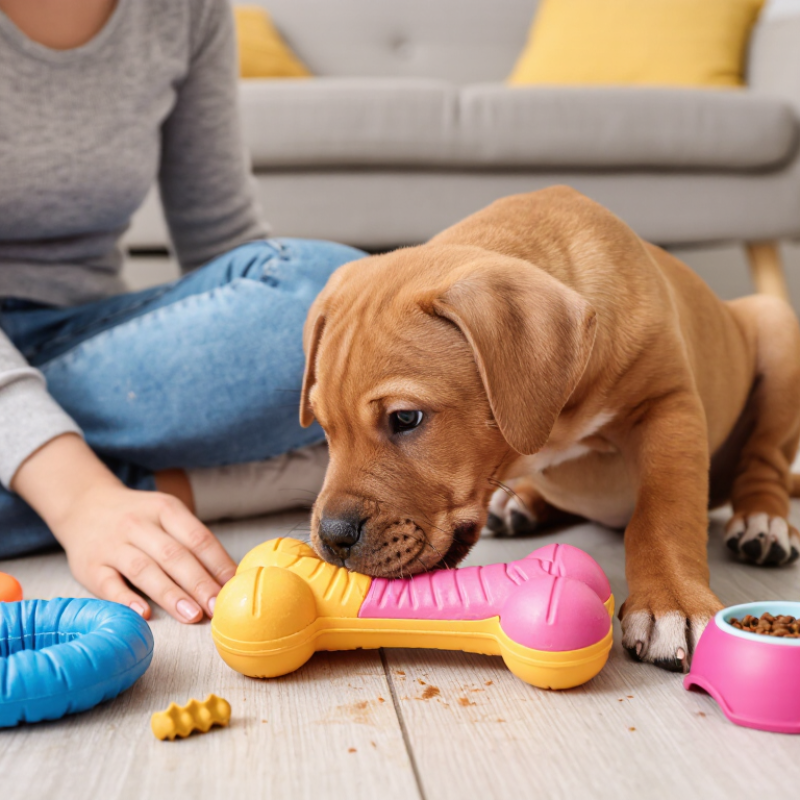
How to Choose Safe Toys for Teething Puppies?
What Teething Puppies Need from a Safe Toy
Teething puppies need relief, not simply a harder object to destroy. A safe toy should bend slightly under pressure and have smooth, rounded edges. It must be large enough to prevent swallowing, yet light enough for a young puppy to carry. I prefer watching the first few play sessions closely. A toy that looks harmless can split along a seam within minutes.
The World Small Animal Veterinary Association reports that periodontal disease affects more than 80% of dogs over three years old. Good chewing habits cannot replace brushing, but they can support daily mouth care. Choose textures that massage the gums without scraping them. Avoid objects that are extremely hard, because fractured teeth may result. The American Veterinary Medical Association also recommends removing damaged chew items promptly. No toy is risk-free.
Tips: Press the toy with your thumbnail. If it does not give at all, it may be too hard. Check for loose pieces, sharp cracks, and missing fragments after every session. Match the toy’s size to the puppy’s current weight and chewing style. Supervise active chewing, especially with an enthusiastic puppy. I sometimes replace a toy too early, but that is safer than guessing after damage appears. Always ask a veterinarian about unusual bleeding, persistent pain, or broken teeth.
| Safety Dimension | What Teething Puppies Need | Practical Selection Guide | Safety Check |
|---|---|---|---|
| Material | A non-toxic, durable material that can withstand normal chewing without breaking into sharp pieces. | Choose toys made from pet-safe rubber, nylon designed for puppies, or tightly woven fabric made specifically for dogs. Avoid toys with unknown coatings, loose fillers, or easily detached parts. | Inspect the toy before each use. Remove it if pieces, threads, or fragments come loose. |
| Hardness | Enough resistance to soothe chewing needs, but not so hard that it can damage developing teeth. | Prefer toys with some flexibility or give. Avoid extremely hard objects such as bones, antlers, hooves, rocks, and hard plastic items. | If a toy cannot be indented slightly or has a rigid, bone-like feel, choose a softer alternative. Ask a veterinarian about suitable chew hardness. |
| Size | A size that is large enough to reduce the risk of swallowing or choking, while still comfortable to hold and chew. | Select the size recommended for the puppy’s current weight and jaw size. Do not give a small-dog toy to a large-breed puppy unless the manufacturer’s guidance supports it. | The toy should not fit completely inside the puppy’s mouth. Replace it when chewing reduces its size substantially. |
| Shape and Design | A simple design without detachable eyes, buttons, ribbons, hooks, or other small components. | Choose rounded or smoothly contoured toys. Treat-dispensing designs can provide mental stimulation when openings are appropriately sized. | Check seams, squeakers, labels, and attachments. Remove the toy immediately if any component becomes accessible. |
| Size of Openings | Openings that allow treats to come out safely without trapping the jaw, tongue, or teeth. | Use treat toys with openings suited to the puppy’s size. Avoid narrow holes that could catch a tooth or tongue. | Observe the puppy’s first sessions and stop use if the mouth, tongue, or teeth become stuck. |
| Durability | A construction appropriate for the puppy’s chewing strength and activity level. | Match the toy to the puppy’s chewing style: gentle, moderate, or powerful. No toy is indestructible, including toys marketed as heavy-duty. | Rotate several suitable toys and check for cracks, sharp edges, deep tears, or missing pieces. |
| Washability | A toy that can be cleaned regularly to reduce food residue, saliva buildup, and microbial growth. | Prefer smooth, washable toys. Follow the care instructions and use mild soap and clean water unless the instructions specify otherwise. | Dry the toy completely before returning it. Discard toys that retain odor, mold, or embedded food that cannot be removed. |
| Supervision Level | Active supervision, especially during the first use or when the puppy is an intense chewer. | Offer chew toys in a safe area and keep children from pulling the toy while the puppy is chewing. | Do not leave a puppy unattended with a toy unless its safety and condition have been repeatedly assessed. |
| Temperature and Texture | A cool, soothing surface may help relieve gum discomfort without exposing the puppy to extreme temperatures. | Some rubber toys can be chilled if the care instructions allow it. Avoid frozen-solid items that may be excessively hard or cause discomfort. | Do not use ice or frozen objects as a substitute for a purpose-designed puppy toy without veterinary guidance. |
| Age and Development | A toy appropriate for the puppy’s developmental stage, mouth size, and changing teeth. | Follow the toy’s age guidance and reassess the choice as the puppy grows. Teething usually occurs as baby teeth are replaced by adult teeth. | Contact a veterinarian if a baby tooth remains after the adult tooth erupts, or if chewing causes significant pain or bleeding. |
| Warning Signs | Prompt attention when chewing is linked with injury, illness, or a damaged toy. | Stop using the toy if the puppy coughs, gags, vomits, has difficulty breathing, develops mouth injuries, or swallows a fragment. | Seek urgent veterinary care for choking or breathing difficulty. Contact a veterinarian after suspected ingestion of toy pieces. |
Key rule: Choose a puppy-appropriate toy that is flexible, correctly sized, washable, and free from detachable parts, then inspect it regularly under supervision.
Read the material and intended use on the package. Avoid strong chemical smells, peeling surfaces, sharp seams, and loose decorations. Natural materials are not automatically safe.
The toy should be wider than the puppy’s fully opened mouth. It must not fit behind the back teeth. Check the size again as the puppy grows.
Yes. An oversized toy may frustrate a small puppy. It might also encourage harder chewing. Compare the toy with the puppy’s current mouth size.
Rounded rings and soft-edged bars are usually gentler than sharp corners. Small ridges may massage gums. Deep grooves can trap food and become difficult to clean.
Choose a toy with moderate resistance. It should flex slightly under hand pressure. If your fingernail cannot mark it, the surface may be too hard.
Very hard surfaces can fracture developing teeth. Dense bones and antler-like materials may seem enjoyable but create risks. Softer, slightly flexible options are more cautious choices.
Press and twist it before use. After chewing, check for cracks, missing pieces, swollen edges, or exposed stuffing. “Durable” is not permanent.
Remove it immediately if it becomes ragged, sharp, cracked, or small. Stop the session if coughing, gagging, or unusual gum bleeding appears. Supervision still matters.
I once trusted a toy that lasted several days. A hidden split appeared later. That mistake showed me that repeated inspection is necessary, not optional.
Ask a veterinarian when tooth damage, unusual bleeding, or risky chewing habits concern you. Personal judgment can miss small injuries. When unsure, seek professional advice.
Choosing the right chew toy can help a teething puppy stay comfortable while protecting developing teeth and gums. When considering what toys are safe for teething puppies, look for products made from non-toxic, puppy-friendly materials that are soft enough to give slightly but strong enough to resist tearing. The toy should be larger than the puppy’s mouth, easy to hold, and free from small parts that could become choking hazards. Different shapes and textures can encourage healthy chewing, massage the gums, and keep puppies interested without placing excessive pressure on their teeth.
Introduce a new toy gradually and supervise the puppy during every chewing session. Check regularly for cracks, loose pieces, sharp edges, or missing material, and remove the toy immediately if any damage appears. Avoid toys that become brittle, splinter, or break apart easily. Replacing damaged toys promptly helps reduce the risk of choking, swallowing unsafe pieces, or injuring the mouth. Safe chewing also works best alongside appropriate supervision and guidance from a qualified veterinary professional when concerns arise.

 Lawn Pet