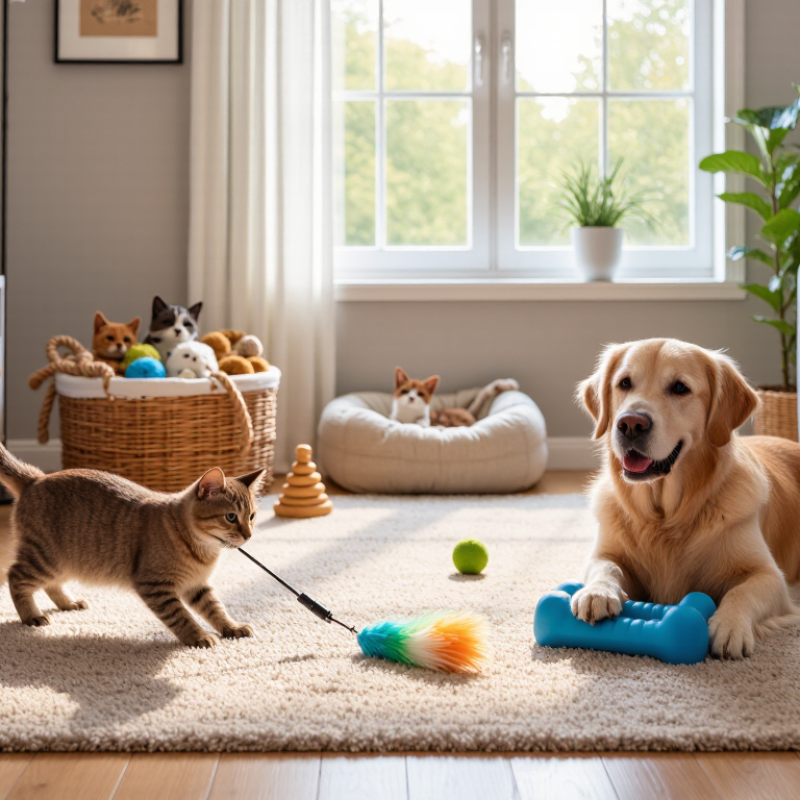
A feather wand flicks across the rug. Your cat crouches, springs, and catches it—then ignores it the next day. Familiar? Toy rotation can renew interest by making some toys temporarily unavailable, while keeping safe favorites within reach. This guide explores how to rotate pet toys for better engagement without turning play into a complicated schedule.
Cat behaviorist Dr. Mikel Delgado’s guidance emphasizes play that engages a cat’s natural hunting behaviors. In practice, that can mean offering a wand for stalking and chasing, then putting it away after a short session. A puzzle feeder can provide a different challenge on another day. For dogs, scent games, chew toys, and fetch toys may each invite distinct kinds of activity. Needs vary, though. Age, mobility, temperament, and household routines all matter.
The sections ahead will cover choosing a small toy collection, setting a simple rotation, and watching for signs of renewed interest. They will also explain when to retire damaged toys and how to keep favorite comfort items available. Start with a basket, not a perfect system. Observe what your pet actually uses. Some toys will still fall flat. That is useful information, not failure. A rotation is a practical experiment, and small adjustments often work better than a rigid weekly plan.
The AAFP/ISFM Feline Environmental Needs Guidelines describe five pillars for a cat-friendly home: safe places, separated resources, opportunities for play and predatory behavior, positive human interaction, and respect for the cat’s sense of smell (Ellis et al., Journal of Feline Medicine and Surgery, 2013). Toy rotation works best when it supports these needs, rather than simply hiding toys to make them seem new. A wand toy can invite stalking and chasing; a soft toy can be placed near a quiet retreat. Keep food, water, litter, and resting areas accessible and distinct from active play zones.
Offer only a few toys at once, then change them when your cat loses interest—not on a rigid calendar. A paper ball under a chair may engage one cat; another may prefer a feather toy moved slowly along the floor. Let your cat catch the toy regularly, and put stringed or small detachable toys away after supervised play. Less clutter. More choice. Note which shapes, sounds, and movements prompt stalking, batting, or walking away. That simple record is more useful than guessing.
Rotation cannot compensate for an unsafe or unstimulating environment. A toy left beside a noisy appliance may be ignored, even if it was popular before. Smell matters, too: avoid heavily scented toys, and consider whether cleaning products or nearby litter affect the play area. The guideline offers a framework, not a promise that every cat will respond alike. We can still get it wrong; watch the cat, adjust, and try again.
Before rotating pet toys, sort them by the kind of activity they encourage. Foraging toys invite sniffing and searching; hide a few pieces of food in a snuffle mat or safe cardboard box. Chasing toys include lightweight balls or wand toys, which work best when a person joins the play. Chewing toys should match your pet’s size and chewing style. Check them often for cracks, loose pieces, or fraying. Puzzle-solving toys offer a small challenge, such as a treat beneath a sliding panel. Social-play toys, like soft tug toys, are most useful when shared with a person or another compatible pet.
Keep it simple. Put a few choices in a basket and offer only two or three at a time. After several days, swap one or two toys rather than removing everything familiar. Watch closely: a toy that looks engaging to you may be ignored, while a plain paper tube may become the favorite. That is useful feedback, not a failed plan. Note what your pet returns to, and adjust the mix. Some toys fit more than one category, and preferences can change with age, energy, or mood. Supervise new toys, especially chew and puzzle options, and remove anything damaged.
A useful cat play routine does not need an elaborate schedule. International Cat Care advises offering two or three play sessions each day. Keep them brief and predictable, perhaps before breakfast, after work, and in the evening. Even five to ten minutes can give an indoor cat a chance to stalk, chase, and pounce. Watch your cat’s body language; a kitten may want longer bursts, while an older cat may prefer slower movement. Let the cat catch the toy sometimes. It helps make the game feel complete.
Choose one or two toys for each session, then put them away afterward. A feather wand can skim along the floor like small prey, while a soft ball can roll across a clear hallway. Swap the available toys every few days, rather than presenting the entire collection at once. Keep wand strings and small parts out of reach when play ends, and check toys for loose pieces. Simple, safe, and easy to repeat.
Some days, your cat may watch instead of chase. That is useful information, not a failed session. Try slower movements, a different room, or a toy that moves beneath a blanket’s edge. Avoid forcing interaction; curiosity often returns when the cat can choose. I have found that routines sound neater on paper than they feel at home. A missed session happens. Notice what your cat responds to, and adjust tomorrow’s play.
A small toy rotation often works better than leaving every toy on the floor. Choose two or three options with different textures or play styles, such as a soft toy, a rolling ball, and a puzzle feeder. Keep the rest in a closed cupboard or opaque storage bin. When toys stay visible all day, some pets may stop noticing them. Out of sight can make familiar toys feel interesting again.
Tips: Swap toys every few days, or when your pet loses interest. Check each item for loose parts, frayed fabric, or damage before returning it to play. A simple rotation note can help, though I admit I sometimes forget to update mine.
Watch how your pet uses each option. Does the ball get chased, or does it roll under the sofa and stay there? Keep the toys that invite safe, active play, and rotate less popular ones back later. You do not need a large collection. In fact, too many choices can make it harder to tell what your pet enjoys. Store toys separately from food and cleaning products, and keep the container inaccessible if your pet might chew it. Rotation is not a fix for every bored moment, but it gives play a little variety without adding clutter.
| Day | Small Selection to Keep Available | Suggested Activity | Store Out of Sight | What to Observe |
|---|---|---|---|---|
| Monday | One familiar favorite, one food-puzzle toy, and one soft or chew toy suited to the pet. | Offer the food puzzle during a supervised enrichment session. Keep the other two available for appropriate play. | Put the remaining clean toys in a closed bin or cupboard, away from the pet’s usual play area. | Notice which toy the pet chooses and whether the puzzle is at a comfortable difficulty level. |
| Tuesday | Keep the same small selection to give the pet time to explore it. | Use a short, supervised play session with a suitable interactive toy; let the pet take breaks. | Keep unused toys stored and inaccessible, especially toys with strings, small parts, or loose pieces. | Check for signs of wear, chewing damage, or reduced interest. |
| Wednesday | Replace one less-used toy with a different safe toy from storage; keep a familiar favorite if useful. | Introduce the replacement calmly and allow the pet to investigate without forcing interaction. | Clean and dry the removed toy before storing it. Follow its care instructions. | See whether the change prompts exploration or whether the pet prefers the familiar toy. |
| Thursday | Keep the current selection of about two or three toys accessible. | Offer a simple scent, search, or food-finding activity using a toy designed for the pet and supervised as needed. | Store toys that are not part of today’s selection out of sight. | Watch for frustration, swallowed pieces, or unsafe chewing; stop the activity if any occur. |
| Friday | Swap one toy if interest has faded; otherwise, keep the selection unchanged. | Repeat a preferred activity or vary how a suitable toy is presented. | Keep inactive toys clean, dry, and separated from food and household chemicals. | Record which toy types attract attention and which are consistently ignored. |
| Saturday | Offer a familiar favorite plus one rotated toy and one suitable independent-play option. | Spend time playing together. Supervise toys that move, contain parts, or could be chewed apart. | Put away toys that are not being used rather than leaving the full collection scattered around. | Check that toy size and construction remain appropriate for the pet. |
| Sunday | Choose the next small selection based on the week’s observations. | Wash or clean toys according to their care instructions and prepare the next rotation. | Discard damaged toys that cannot be made safe; store intact toys for a later rotation. | Adjust the selection to the pet’s preferences, play style, and safety needs. |
| Practical guide: A rotation is a flexible routine, not a fixed rule. Keep only a few suitable toys available at a time, change them when interest declines, and supervise play whenever a toy could be swallowed, become tangled, or break apart. Choose toys appropriate to the pet’s species, size, age, and chewing habits. | ||||
Keep a simple play log beside your pet’s toy basket. Note the toy, date, and minutes of active play; a phone note works too. Watch what your pet does, not just what you offer. Does the cat chase a feather for two minutes, then walk away? Does the dog carry a ball but ignore a rope? These small details can reveal preferred textures, sounds, and play styles. Short sessions count. Even five minutes is useful.
When attention fades, put that toy away and offer two or three different options. After several days or a week, bring it back and compare your pet’s response with your notes. There is no perfect rotation schedule; pets change with mood, age, and household activity. Reintroduce a toy during a quiet moment, then watch for renewed interest, such as approaching, pouncing, or carrying it. If interest stays low, rotate it out again. No need to force it. Check toys before each return for loose parts, frayed seams, or cracks, and remove damaged items. My own notes can get patchy, so keep the system easy to maintain. The point is noticing patterns, not collecting perfect data.
Keep a few toys available and store the rest out of sight. Swap them when your cat loses interest, not by a strict schedule.
Try two or three with different textures or play styles. A soft toy, rolling ball, and puzzle feeder offer clear choices.
Change them every few days, or when play fades. Watch your cat rather than following a rigid calendar.
Notice what gets chased, batted, or ignored. A short note can help, though it is easy to forget.
Keep play away from food, water, litter, and resting places. A noisy appliance nearby may make even a favorite toy less appealing.
Check toys for loose parts, frayed fabric, or damage. Put stringed and small detachable toys away after supervised play.
Avoid heavily scented toys. Cleaning products or nearby litter can also affect the play area.
Try a different movement or texture, such as slowly sliding a feather toy along the floor. Rotation helps, but it cannot fix every bored moment. We can still guess wrong.
Toy rotation keeps a cat’s environment interesting by regularly changing which toys are available while supporting the five pillars of feline wellbeing: safe places, separate essential resources, opportunities for play and hunting, positive social interaction, and a stimulating sensory environment. To plan how to rotate pet toys for better engagement, sort toys by purpose, such as foraging, chasing, chewing, puzzle-solving, and social play. This makes it easier to offer a varied mix that suits your cat’s preferences and encourages different kinds of activity.
Build two or three short play sessions into the day, using toys that invite movement, exploration, or interaction. Keep only a small selection within reach and store the rest out of sight so familiar toys can feel fresh when they return. Note which toys attract attention, how long your cat plays, and which activities seem most enjoyable. When interest fades, swap in a different selection; bring a toy back later if your cat appears ready to engage with it again.
